Remembering Emile Moisan
March 22nd, 1962 - February 4th, 2026
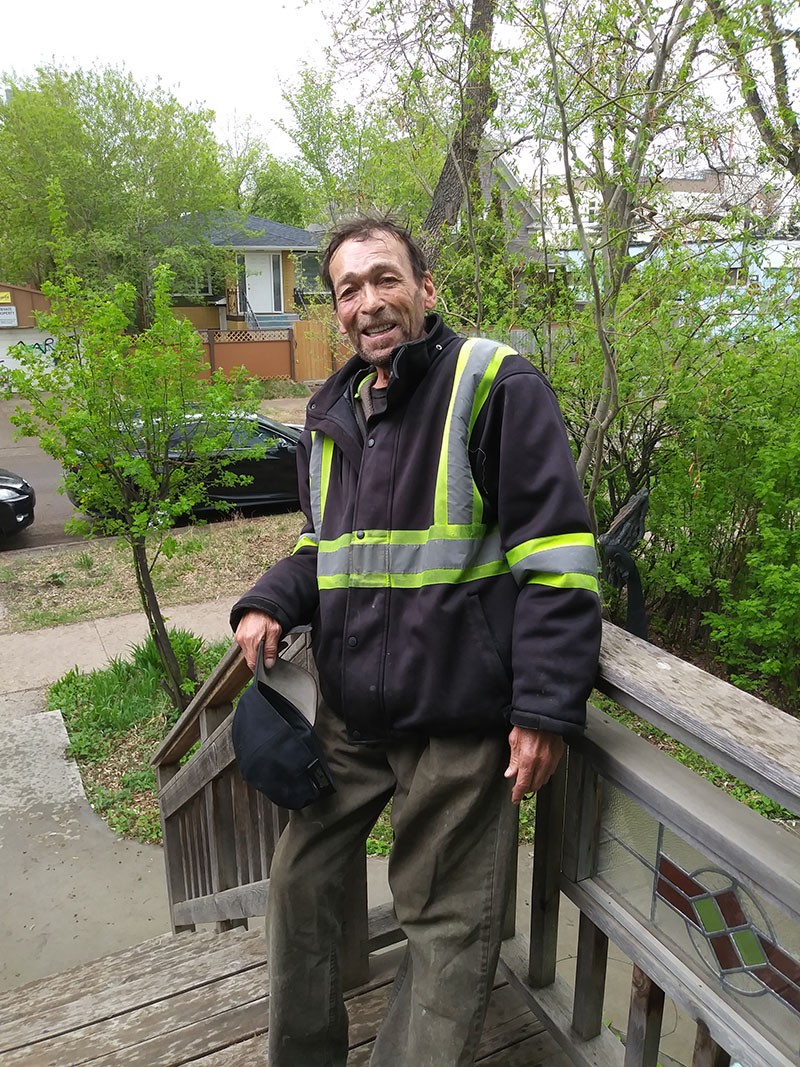

We met Emile Moisan some 20 years ago, when he came to ask if we had any empty bottles for him to collect. We soon developed a regular relationship: he became our bottle collector. We live close to a bottle depot so it was easy for him to pick up our bag of bottles.
He was a kind and gentle man with a sense of humour. He was homeless at first and the streets and shelters were not easy for him. He was beaten up more than once, and one time when he appeared he was so injured that with his permission I called an ambulance. Later he told me he almost died that time.
He’d been in the trades but an injury sidelined him, and when his compensation ran out he self-medicated for a lot of chronic pain from his disability. His choice was alcohol, a harsh mistress. But even heavily the worse for wear, he retained his nature, and although he talked of some street battles, I never saw him do a violent act or heard him make a threat. He was often bullied and suffered insults and slurs, but shrugged them off.
He got into housing at last, minimal but it suited him, and he made a loyal and good friend Sammy. He and Sammy moved for a while into Ambrose Place, and both of them improved in health. But they kept up their routines of bottle-picking, visiting their clients. Sammy used to wait across the street, and Emile joked it was because he swore too much to expose to us!
Emile got a cell phone and after that he’d call to ask if we had bottles. I loved that insertion of the 21st century into his business.
Sammy died, and Emile was consumed with grief, but he carried on. We still saw him regularly. He moved into less expensive housing, got a job at a tire yard, and his life was in a kind of order that allowed him to relax a bit. When we saw him, he was always in much better shape.
However, Emile struggled with severe health issues, some of them a consequence of years of hard street life and some just the inevitable miseries of aging. He generally coped with reasonable good humour, but sometimes he became very discouraged. His friends were his sustenance at those times. I consider we were lucky to be know him, and we shared much mutual affection, but our friendship was inevitably much less involved than the people with whom he shared his home and interests.
Although we’re poor by societal standards, we were rich compared with Emile, but he valued and mostly enjoyed his life despite his troubles and losses. When he came by in particular need (a late cheque, a snafu in his benefits, or a particular health crisis), sometimes we added a few bucks or bus fare. When his teeth became a problem, we occasionally gave him a bit of homemade soup and other softer food to take home.
He in turn would bring gifts sometimes: a little candle holder, a ring he found. Most recently, he found a lovely little clock with a figure in a garden surrounded by birds, which he fixed and brought to me. He knew our names but he called me Girl (which was more flattering as time went on.) He chose one of my landscape paintings to take home and hang up.
During the tough part of the pandemic we probably saw Emile more than we saw any of our friends. He was part of our “bubble,” and he kept his regular pickups. We’d talk each time about what was going on in our lives. In summer we’d stand or sit on the front steps amid the garden with its willow tree and magpies, and joke about the vagaries of life. In winter we’d get him warm and dry, and then he’d head back out.
Also during that pandemic isolation time, I wrote the third of a series of three crime novels set in Boyle Street. I asked Emile’s permission to use elements of his and Sammy’s story, much changed for privacy reasons (and, needless to say, the events that happened in the novel didn’t happen to Emile and Sammy, nor to the other two people who gave me similar permissions. It was inspiration, not imitation, that drove the story.)
The book, He Wasn’t There Again Today, came out in 2023. I gave him a copy but I never heard if he liked the fictional Fleury who shared some of his life story. I am proud, however, that this book can stand as an appreciation and partial memorial to Emile Moisan, a sweet human being who met the terrible vagaries of a vulnerable life with dignity, humour, generosity, and great courage.
Candas Jane Dorsey is a writer and visual artist who lives in Boyle Street with her partner, performer and writer Timothy J. Anderson, and Joffrey, a small bossy dog.